
Letizia Battaglia

Palermo-born, but trained in Milan, Battaglia (1935 – 2022) worked in Sicily as a front-line photo journalist in the bloody period of the Eighties and early-Nineties. In the review of her exhibition in Liverpool’s Open Eye Gallery last year, Michael Day introduced the works from Battaglia as the testimony of violence with the eyes of an experienced photojournalist. “Her most famous monochrome images show death and squalor – memorably in the immediate aftermath of the shooting of a prostitute and two clients. But Battaglia created tension in her work by combining such images with delicate still lives and intense portraiture of Sicilian children and women. As such, she showed how organized crime is blighting the lives of whole families and generations.”
Battaglia’s career as a photographer wasn’t easy from the first beginning. Not until her 34 did she start to pick up a camera, and by the time she was in Milan, already a mother of three kids. Rachel Spence in Financial Times described how Battaglia encountered the theme of Mafia as following. “Discovering that supplying images with her copy boosted her wages, she applied herself to the craft. Although her signature images of murder scenes earn her regular comparison with the American photographer Weegee, it is telling that she names Diane Arbus – who revealed our own shadow selves in her freakish subjects – as her greatest inspiration.” (Rachel Spence. “Letizia Battaglia: Breaking the Code of Silence, Open Eye Gallery, Liverpool – review”. FT, February 26, 2014)
Battaglia’s attitude of “anti-Mafia” and deep thoughts towards her country was developed stronger as her works grew maturer. There is again another description from Rachel Spence, “Among the many Italian masters who might claim her as their heir, it is Caravaggio who makes the strongest case. Like Battaglia, the 17th-century painter was a magician of light and shade. He too sought out the dead and impoverished as models. (Battaglia’s corpses, encircled so often by operatic crowds of mourners, paparazzi and policeman, recall Caravaggio’s painting of the Virgin on her deathbed surrounded by a chorus of stricken followers. And her image of two filthy, naked feet, captured as their owner kneels on stone steps, picks up one of his favourite motifs.)” It is not too much to compare Battaglia with the Italian great painter Caravaggio. Both of them deal with light and darkness, life and death.
She is without a doubt a great contemporary photographer, artist, journalist, and social activist. She has won numerous photo awards worldwide. Battaglia has been represented by LANG (previously Metis_NL) since 2003.

‘Avanti!’
The struggle continues
by Ron Lang
“No, I’m afraid there’s no one in the room,” the receptionist replied curtly over the phone.
Strange—we had suggested calling her before picking her up… We’ll head over there anyway.
On a bench in front of the hotel, exposed to the biting spring air—a chill felt all the more keenly by someone accustomed to the warmth of Sicily—Letizia sits huddled in a thick scarf, clearly disappointed, smoking a cigarette.
After several warnings, the hotel manager gave her the last; one more cigarette in the room and she will be asked to leave the hotel. However her disappointment disappears quickly. As soon as we arrive in the Red Light District, where she insisted we would take her, her distinctive voice rang out “Ciao ragazze, I love you”, while waving to the prostitutes as if they were old friends of hers. She blows the girls kisses and to our surprise they were answered with big smiles by the half-naked ladies behind the windows. Typical Letizia: she was respectful, interested and open to everyone she encountered.
In December 2001, the VPRO aired the documentary “The Woman with the Camera: Letizia Battaglia” by Hans Keller and Hein Aalders on tv. The documentary showed a combative photo- grapher who captured the pain and grief of Sicily and its inhabi- tants. With her camera as a weapon, she tried to fight injustice by portraying it. She wouldn’t allow us to forget about it. Both her personality and her photographs captured us right away.
We bought her book ‘Passion, Justice, Freedom: Photographs of Sicily’, published in 1999 by Aperture in New York. Her photographs included more than a coronation of victims, their families, and the Mafia itself; they outlined the history of Sicily. A portrait of an era in Palermo, Sicily with all its facets: daily life, poverty, sadness, joy and celebrations. That’s when we knew for sure: an exhibition had to be made. Enthusiastically, we showed her book to the ‘connoisseurs’, they wondered if this was art? Was it not documentary photography? But we didn’t care. The photograph’s intriguing and explosive nature certainly transcended the news value they had in their time.
Letizia’s photos are universal in quality, not only do they contain a striking image of the times, but also the love for her Palermo and its inhabitants. They show the hope for a better future for Palermo and its youth. Respect for the Sicilian people, for the victims of the Mafia, who were often the perpetrators too.
She documented the lives of ordinary people in their daily environment: at the market, at work or at their meager houses. There seems to be a ‘piece’ of Letizia in every photo. Letizia had to get very close to her subject, also forced by using her 35mm lens, in order to respectfully capture the gruesomeness of their death or their living conditions. This gives her photos an unprecedented intensity and power. She worked with modest resources, restricted space, limited time, and often insufficient light. She had to work with the circumstances as they were.
For the photo from 1982, Triple Homicide in Piazza S. Oliva, she consciously chose the moment she wanted to capture; she waited until all the carabinieri, journalists and nosey people were gone, only then she took the perfect picture in the few seconds she had been given: Nerina and her two friends, three tragic victims in a gloomy room. On the wall a calendar of saints on one side and a poster of the 1982 FIFA World Cup featuring half-naked pin-up Carmen Russo on the other. The questionable Italian Trinity: Mafia, religion and “Veline” as they call the showgirls that are present in almost every TV show. The photo of Nerina has been hanging in our living room for years now, and I am always surprised by the precision with which Letizia has framed this image. How this tragedy, without any manipulation, says everything about the confusing Italian culture. Of all the pictures taken of this specific crime scene, only hers became iconic. Connecting with Letizia was not that easy back in 2001, internet had just started and there was no such thing as a search engine.
All we had were telephone books and acquaintances in Italy. Thanks to my persistent Italian wife Rossana, we got in contact with a journalist who had Letizia’s telephone number. In our first conversation, it became clear that she thought her photos to be hideous and certainly not suitable for an art gallery. In the end she agreed to an exhibition and left us completely free to select from her photographs. She did express her wish to do more than just an exhibition, she suggested organizing a lecture or discussion somewhere.
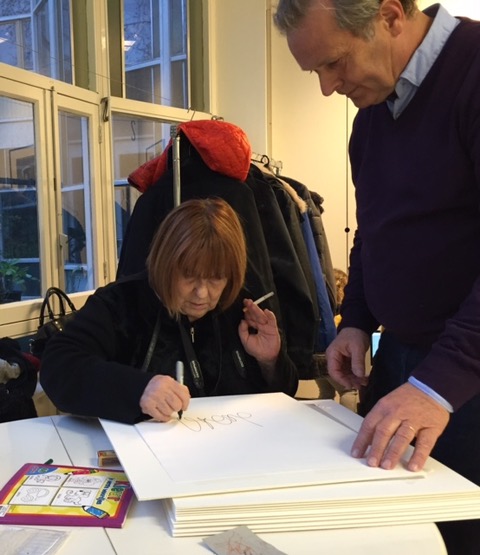
Excited about the collaboration we got started to make the exhibition: Voja Mitrovic made prints from the negatives in Paris, sent the photos to us, and returned the negatives to Letizia. We were the first art gallery to exhibit her works and thought it was important to determine the edition of the photos, which was set at 12 in consultation with her. Letizia soon let go of this, she found it too much hassle and it didn’t interest her at all.
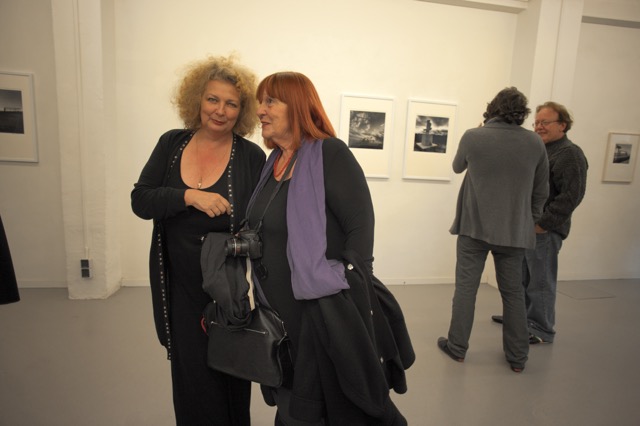
Everything went well, but there were also setbacks: Alitalia’s offer to sponsor Letizia’s ticket was withdrawn by the company’s head office. The financial contribution from The Italian Cultural Institute was cut in half and the panel discussion could not take place at the Institute anymore and was moved to another venue. The Italian authorities were clearly not ready to share the story of Letizia with the rest of the world. On 15 February 2003 the exhibition was opened by Hans Keller. In the following weeks, a significant number of interested parties visited the exhibition. The visitors included a striking number of young people but also collectors and the press, everyone was enthusiastic and there was commercial success. The interest for Letizia and her work would continue to grow, and still does to this day.
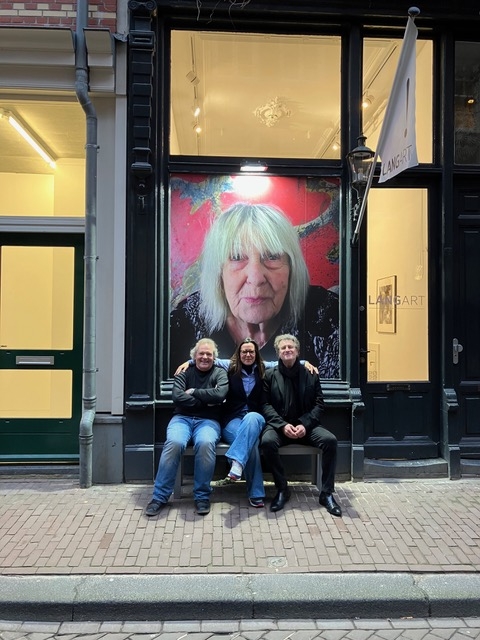
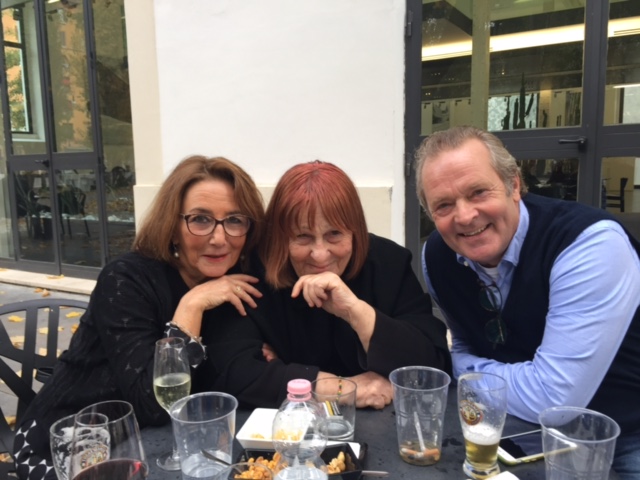
Since we first met Letizia in 2003, we have remained in close contact with her professionally but we also became friends.
Over the last twenty years we have created five exhibitions with Letizia in Amsterdam and presented her at art fairs like Artissima (Turin), MiArt (Milan) and Art Rotterdam (Rotterdam). Working with Letizia was simple, she communicated very directly and knew exactly what and how she wanted things to be done. When she would come to the Netherlands she always had specific wishes: one time she wanted to stay in a canal apartment another time, on a houseboat. It was our pleasure to arrange it as far as we were concerned anything was better than a hotel, like the first time she came and she was almost kicked out of.
She prepared well for her visits to Amsterdam. One time she wanted to visit the EYE Film Museum, another time she wanted to see the architecture in the Eastern Docklands, but also the Red Light District and the Stedelijk Museum were on her list of sights to see. Here visits were always very intense; her interest in a subject was almost a cross-examination with a barrage of questions. She wasn’t satisfied with a halfhearted answer, so she kept asking.
However if the subject wasn’t interesting enough her attention would immediately wane, and she was already busy with something else.
She had so much energy and no time was allowed to be wasted: ‘Avanti’. When I arrived at the EYE Film Museum, she forced me to drive the car onto the bike lane, straight to the entrance. Yes, she had reduced mobility, but the main reason was the time profit it generated as there was so much to see:
On 13 April 2022, Letizia died at the age of 87. The photographer, so hard to track down in 2001, was commemorated in newspapers, magazines and on TV all over the world. The President of Italy, Sergio Mattarella – whom Letizia photographed in 1980 as he carried his brother Piersanti Mattarella out of the car he had just been killed in sent condolences to her daughters. Even a street in Palermo was named after her. The significance of her work is indisputable, and she is described as one of the most important photographers of all time.
She has become the symbol of the fight of ordinary citizens against injustice. For freedom, for faith in the power of youth and especially of young women whom Letizia saw as the strength of life to shape a new world.
We lost a special friend, with whom we had many wonderful moments in those twenty years.
‘Avanti’ said Letizia often, on to the next battle, never give up, don’t complain, keep going! The battle fought so bravely by Letizia will now have to be continued by other women.
Her photographs will always bear witness to the fight against injustice, for freedom and justice.
We are proud of the exhibition ‘Avanti!’ la Battaglia Continua in which artists contribute with their work in memory of Letizia. Some have known her, have worked with her or lived with her, others join in out of admiration for everything Letizia Battaglia stands for.
We thank the artists:
Gijs Assmann,
Merijn Bolink,
Santi Caleca,
Olga Chernysheva,
Pauline Curnier Jardin,
Marlene Dumas,
Alessandro Guerriero,
Alfredo Jaar,
Marion Kalter,
Susan Meiselas,
Lia Pasqualino,
Sylvia Plachy,
Maria D. Rapicavoli,
Daynita Singh,
Shobha,
Emo Verkerk and
Franco Zecchin
For their contribution
In particular, we thank Alfredo Jaar with whom the idea for the exhibition was conceived during a studio visit in New York City with Sara, my business partner and daughter. Alfredo continuously encouraged and helped us along the way and we are very grateful for his support.
Click here to add your own text